What Are Custom Wire Forms and Which Industries Use Them?
Custom wire forms are components made by bending, shaping, and joining metal wire into a specific design that meets exact customer specifications. Unlike standard catalog parts, custom wire forms are engineered around your dimensions, load requirements, finish, and application. They can be as simple as a single bent clip or as complex as a welded, multi-plane assembly.
Because wire is strong, lightweight, and cost-efficient, a custom wire form is often the ideal solution for guarding, supporting, holding, or separating other components. An experienced wire form manufacturer can produce them in small prototype runs or in high-volume production.
How Custom Wire Forms Are Made
Design and Engineering
Every project starts with a drawing, a sample, or even just an idea. Engineers review the application, tolerances, and performance needs, then recommend the wire diameter, shape, and joining method. A solid design-for-manufacturing review at this stage prevents costly changes later and keeps custom wire forms cost-effective.
Material Selection
Common materials include carbon steel, stainless steel, and other wire alloys. The right choice depends on strength, corrosion resistance, temperature, and budget. Stainless steel, for example, suits damp or washdown environments, while coated carbon steel works well for general indoor use.
Forming, Welding, and Finishing
Wire is cut, bent on precision forming equipment, and welded where needed. Finishing options such as zinc plating, chrome plating, and epoxy or powder coating add corrosion resistance and a clean appearance. Final inspection against the customer print ensures every custom wire form matches the specification.
Common Types of Custom Wire Forms
The range of custom wire forms is wide, but most fall into a few familiar groups:
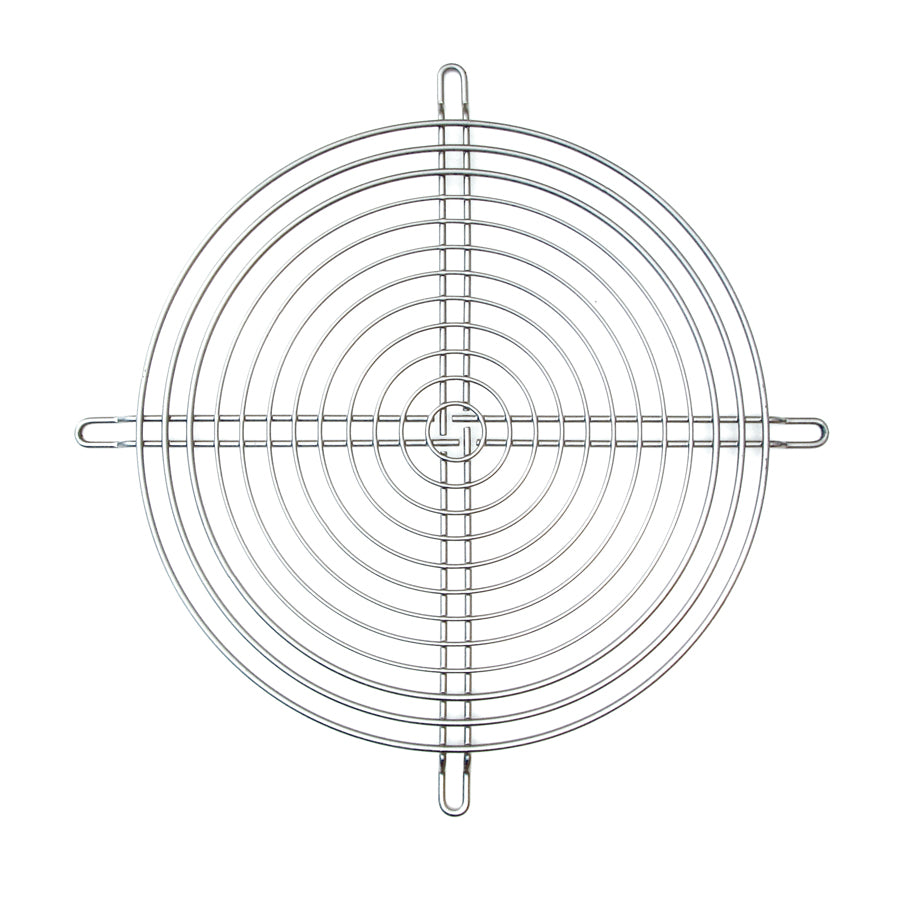
- Fan guards and grills: Wire fan guards protect people and equipment from rotating blades while allowing airflow.
- Safety guards and cages: Exit sign guards shield signs from impact and vandalism.
- Racks, baskets, and trays: These hold, organize, or separate parts during use, storage, or washing.
- Clips, hooks, and retainers: Small custom wire forms secure cables, panels, and assemblies.
- Support frames and brackets: Lightweight structures hold components in position.
Industries That Use Custom Wire Forms
Because custom wire forms solve so many design problems, they appear across nearly every sector.
Electronics and Computing
Servers, desktop computers, and electronic enclosures generate heat, so cooling fans are essential. Custom wire forms such as finger guards and fan grills keep hands and cables away from spinning blades without restricting airflow.
HVAC and Cooling Systems
HVAC units, condensers, and ventilation equipment use large fans that must be guarded for safety. Durable, corrosion-resistant custom wire forms stand up to outdoor exposure, vibration, and constant operation.
Industrial and Manufacturing Equipment
Factory machinery depends on guards, racks, and holders that are strong yet easy to install. Custom wire forms can be designed to fit unusual equipment layouts that standard parts cannot accommodate.
Telecommunications and Data Centers
Network cabinets and power systems need reliable cooling and cable management. Wire guards, retainers, and support forms protect critical equipment and keep installations organized.
Medical and Laboratory Equipment
Medical devices and lab instruments need clean, precise, and dependable components. Custom wire forms in stainless steel or specialty finishes can meet demanding cleanliness and durability needs.
Commercial and Public Buildings
Schools, gyms, warehouses, and hospitals use wire guards to protect exit signs, lighting, and equipment from damage. A well-made guard is a small cost that prevents larger repairs.
Benefits of Custom Wire Forms
Why do engineers and purchasing teams choose custom wire forms over standard parts?
- Exact fit: Parts are built to your specifications, not adapted to them.
- Cost efficiency: Wire is an economical material, and efficient production keeps unit costs low.
- Design flexibility: Shapes, sizes, materials, and finishes can be tailored to the application.
- Strength with low weight: Wire delivers durability without adding bulk.
- Scalability: The same design can move from prototype to full production.
How to Choose a Custom Wire Form Manufacturer
The right partner makes a major difference in quality, lead time, and total cost. When evaluating a wire form manufacturer, look for:
- In-house design and engineering support to refine your concept
- Quality systems and inspection, such as ISO-certified manufacturing
- A wide choice of materials and finishes
- Flexible supply options, including inventory management, consignment, and safety stock programs
- Manufacturing capacity and global support to serve your production schedule
GardTec offers all of this. As a leading supplier of fan accessories, we design, engineer, and manufacture custom wire forms with facilities in the United States and China. You can learn more about GardTec and see how we back every order with quality and safety standards.
Conclusion
Custom wire forms are versatile, economical, and built to your exact needs, which is why they are used in electronics, HVAC, industrial equipment, telecommunications, medical devices, and commercial buildings. Whether you need a simple clip or a complex welded assembly, working with an experienced manufacturer ensures a reliable result.
Ready to get started? Share your drawing or idea with our team and request a quote for your custom wire forms project.